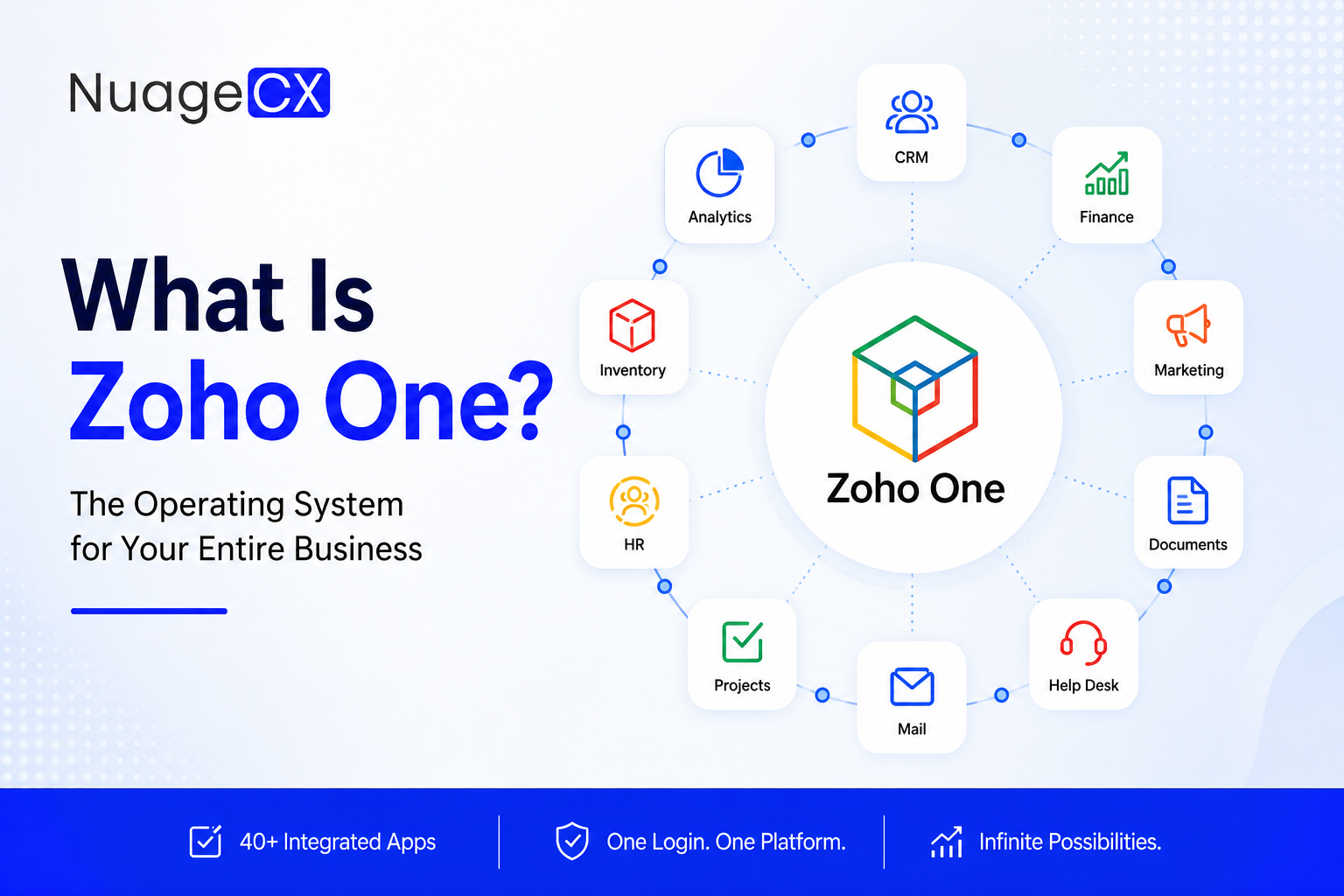
What Is Zoho One? The Operating System for Your Entire Business
Common Challenges When Implementing Zoho One
What Is Zoho One?
Zoho One is a unified suite that bundles more than forty five integrated applications covering sales, marketing, finance, HR, operations, and collaboration into a single licensing plan. Rather than purchasing and managing separate subscriptions for CRM, accounting, expense management, HR and email, Zoho One gives every employee in the organization access to the full suite under one license, often referred to as an operating system for business.
This approach removes the data silos that occur when departments use different vendors for different functions. A lead captured in Zoho CRM can flow into Zoho Books for invoicing, Zoho Expense for travel costs and Zoho People for HR records, all without manual data transfer between systems.
If your business is exploring whether to adopt individual Zoho apps or the full Zoho One suite, the Zoho services outlines how each application fits together.
What Is Zoho One? The Operating System for Your Entire Business
Who Should Consider Zoho One?
Zoho One is particularly valuable for businesses that already use three or more separate software tools across departments and are experiencing data silos, duplicate work or reporting inconsistencies. It is also a strong fit for fast growing companies that want to standardize their technology stack early, before fragmented tools become difficult to untangle later.
Smaller businesses using only one or two tools may not yet need the full suite, and could start with individual applications like Zoho CRM or Zoho Books before scaling into the full Zoho One ecosystem as their needs grow.
How NuageCX Helps With Zoho One Implementation
As a Zoho Premium Partner, NuageCX helps businesses plan a phased rollout of Zoho One based on actual business priorities rather than implementing everything at once. This includes department by department configuration, data migration from existing tools, integration mapping across applications and training programs to ensure high adoption across teams.
Conclusion
Explore the full range of Zoho solutions on the partner page or read more implementation guides on the NuageCX blogs section.
Zoho One Pricing Considerations
What Applications Are Included in Zoho One?
Zoho One spans several core categories of business software, including:
Because every application is built on the same underlying platform, data structures and permissions remain consistent across departments, which significantly reduces the technical overhead of maintaining a multi vendor software stack.
Why Businesses Choose Zoho One Over Individual Tools
1. Unified Data Across Departments
Every department works from the same customer and operational data, eliminating duplicate entry and inconsistent reporting.
2. Cost Efficiency at Scale
Licensing every employee under a single Zoho One plan is often more cost effective than purchasing separate subscriptions for each department once a business grows beyond a handful of tools.
3. Centralized Administration
IT administrators can manage user access, security policies and application permissions from a single admin console instead of juggling multiple vendor dashboards.
4. Faster Cross Department Workflows
Automated workflows can span multiple departments. For example, an approved expense report in Zoho Expense can automatically trigger a journal entry in Zoho Books without manual intervention.